Are you optimising your ads for the Anxious Audience?

Mar 1, 2022 | 0 comments

Why your ads get clicks but not conversions

You can do everything “right” in ads and still get poor results.

You can target the correct audience, get clicks at a decent CPC, and see engagement. And yet, leads do not come in. Purchases do not happen. Bookings stay flat.

When this happens, most teams blame the platform or the targeting. But in many cases, the real issue sits between the click and the conversion.

It is anxiety. Not clinical anxiety. Buying anxiety.

The kind of hesitation people feel when they are about to trust something unfamiliar with their money, their contact details, or their time.

What the anxious audience really is

In every market, your ad traffic lands in different awareness states.

Segment 1: Completely unaware

They have never heard of you. They do not know your product. They do not know if you are legitimate.

Segment 2: Brand aware but product unclear

They recognise your name or logo but do not understand what you sell or why it matters.

Segment 3: Problem aware but brand unknown

They know the problem and they want a solution, but they do not know why you should be the one to solve it.

Segment 4: Fully aware

They know you, they know what you do, and they already trust you or they are close to trusting you.

Only a small percentage of paid traffic is Segment 4. Most paid traffic sits in Segments 1, 2, and 3. Those segments are anxious because they are being asked to make a decision faster than trust can form.

The real reason conversions stay low

People do not avoid conversion because they hate your offer. They avoid conversion because conversion has a cost.

Not always a financial cost. A psychological cost.

They risk being scammed, receiving spam calls, losing money, buying the wrong product, wasting time, looking foolish, getting locked into a bad vendor, or sharing private information with the wrong company.

When your brand is not established in their mind, the brain defaults to caution. So your job is not only to sell. Your job is to reduce perceived risk fast.

Trust velocity is the hidden metric behind high performing ads

Most teams track CTR, CPC, CPA, and ROAS. But the metric that actually decides conversion is trust velocity.

Trust velocity means how quickly a visitor gets enough proof to feel safe taking the next step.

When trust velocity is low, users hesitate. When trust velocity is high, users act.

Your landing page is not just a sales page. It is a trust-building environment that must pass a user’s internal audit within seconds.

What creates anxiety after the click

Here are the most common sources of post-click anxiety.

1. The page does not match the ad promise

If the ad talks about an offer, price, benefit, or outcome and the landing page starts with generic branding, the user feels misled. Even if the offer exists somewhere below, the initial doubt is enough to damage conversion.

2. The page feels like it was built for you, not for them

If the page begins with “We are a leading company established in 2012…” you are talking about yourself when the visitor has one urgent question.

What is in it for me and can I trust it?

3. The user cannot quickly understand what you do

Confusion creates anxiety. If the visitor needs to read too much to understand the product, they leave.

4. The page lacks proof

No testimonials, no case studies, no numbers, no credibility markers. An unknown brand without proof feels risky.

5. The form asks for too much too soon

The faster you demand effort and data, the more anxiety rises.

6. The page has weak legitimacy signals

No address, no registration details, no SSL, no clear policies, no real photos, no identifiable people. All of this increases hesitation.

How to optimise for the anxious audience

Here are eight strategies you can apply immediately, with clarity on what to change.

1. Create message continuity from ad to landing page

The first job of the landing page is not to impress. It is to confirm.

Within the first screen, the visitor should feel: “I am in the right place.”

To do this, repeat the core promise of the ad in the headline, use the same offer language, keep the visual style consistent, use the same keywords and intent framing, and show the next step clearly.

If you run multiple ad angles, do not send all of them to one generic page. Build landing pages or sections that map to the intent of each ad.

Continuity reduces doubt. Doubt kills conversion.

2. Solve the problem before you introduce the product

A cold visitor does not want your features. They want clarity that you understand their situation.

Structure your first section like this: problem statement in their language, consequence of the problem, what a better outcome looks like, how your solution delivers it, and proof that it works.

This shifts the page from vendor pitch to buyer reassurance.

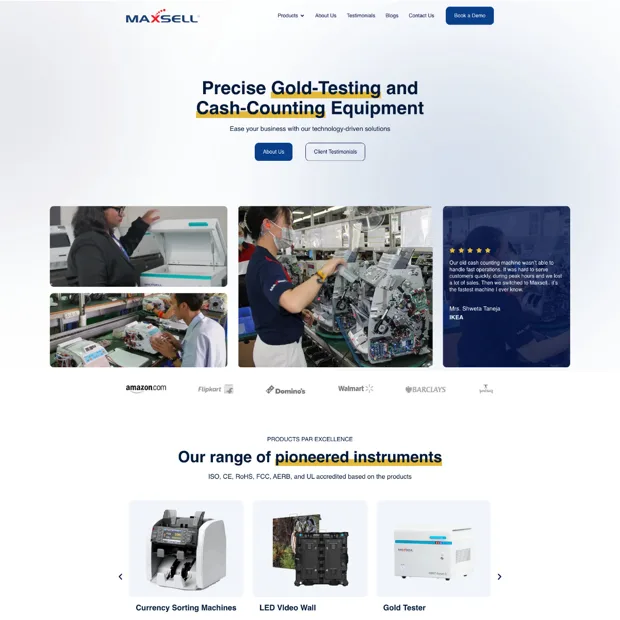
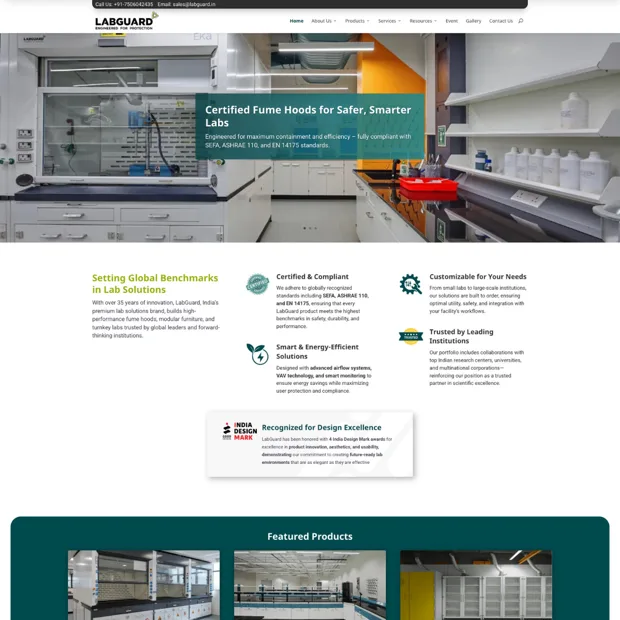
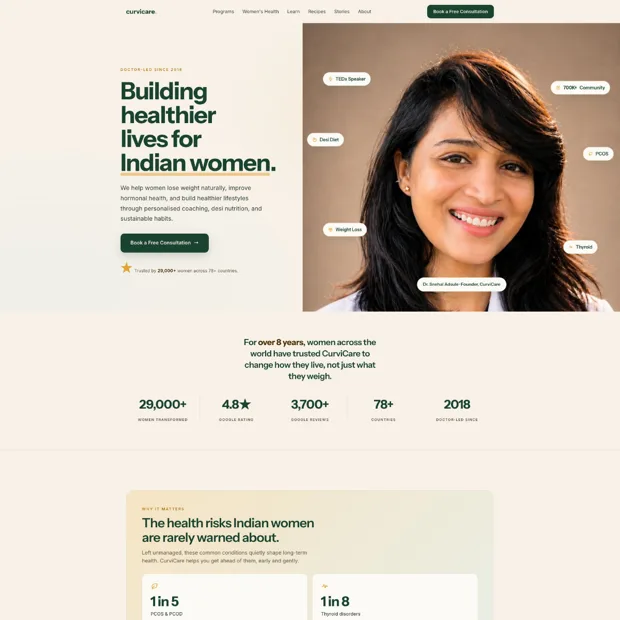
3. Use trust anchors that do not require reading

Most visitors scan. So your trust elements must be visible at a glance.

  • Client logos
  • Ratings or review counts
  • Numbers that matter, like installations, projects, users, years
  • Industry certifications
  • Compliance standards
  • Media mentions
  • Recognisable partner brands
  • Security badges for checkout pages

These are not decorations. They are risk reducers.

4. Add social proof that answers the user’s fear

Not all testimonials work. The best testimonials reduce a specific fear.

  • We were worried about after-sales support but they handled everything
  • Delivery timelines were tight and they met it
  • We switched from another vendor and this was smoother
  • We thought this would be complicated but onboarding was easy

Your proof should address anxiety, not just praise.

5. Align form length with intent level

A short form is not always best. The right form depends on intent.

If your ad is cold and informational, ask for minimal data and offer a low-risk next step like a brochure, price range, checklist, webinar, or demo slot.

If your ad is high intent like “Get Quote”, add qualifying questions, but explain why you need them with microcopy such as “Helps us share accurate pricing”.

Consider progressive profiling. Step 1 asks for name and phone. Step 2 asks for details after the first commitment.

6. Reduce perceived risk with clear policies and guarantees

People fear hidden costs and misuse of their data. Address it directly.

  • No spam. We call only once to understand your requirement.
  • Your details are used only for this enquiry.
  • No advance payment required.
  • Transparent pricing.
  • Refund policy.
  • Warranty terms.

The goal is not to sound legal. The goal is to sound safe.

7. Remove ambiguity with real-world legitimacy

Anxious users look for signals that you are real.

  • Real team photos
  • Founder or leadership profile
  • Office or factory address
  • Registration information if relevant
  • Clear contact methods
  • Working phone number
  • Google Business profile link if applicable
  • Case study pages that show real outcomes

If you look anonymous, you feel risky.

8. Build an FAQ that behaves like a conversion tool

FAQ is not a support section. It is a deal-closer.

Write FAQs based on objections, not product details.

  • Who is this for and who is it not for?
  • What happens after I submit the form?
  • How long does it take to get a response?
  • Do you provide installation or onboarding?
  • What if I do not know the exact requirement yet?
  • What proof do you have in my industry?
  • What are the total costs involved?
  • Is there ongoing support?

When you answer objections before they are spoken, conversion improves.

A practical checklist to audit any campaign

  • Does the first screen match the ad promise clearly?
  • Does the page explain the problem in the user’s language?
  • Is proof visible within the first scroll?
  • Is the next step low risk for cold traffic?
  • Does the form ask only what is necessary for this stage?
  • Are legitimacy signals present without digging?
  • Are policies and privacy reassurance visible near the form?
  • Does your FAQ answer objections that stop action?

Key takeaways

  • Most paid traffic is anxious because it is unfamiliar and risk-aware.
  • Low conversion is often a trust velocity problem, not a targeting problem.
  • Your landing page must confirm, reassure, and validate before it asks.
  • Proof must be fast, visible, and relevant to user fears.
  • Form friction should match intent, not internal sales preference.
  • FAQs should remove objections, not explain features.

When you optimise for the anxious audience, you stop forcing conversions and start earning them. And that is when your ad account begins to behave like a predictable growth engine.

Request a Pipeline Audit

No sales pressure. Just an honest assessment of your growth stack.

    100% Confidential. We never share your data.